

Concrete sidewalks crack, sink, and become uneven primarily due to poor soil compaction, water erosion beneath the slab, and seasonal freeze-thaw cycles. When the underlying sub-base shifts or washes away, it leaves unsupported voids that cause the heavy concrete to fracture and settle under weight. Addressing these subsurface flaws during construction is the only way to ensure long-term structural integrity.
Core Structural Failures: Why Concrete Walks Shift
Walkways bear the brunt of changing outdoor elements year after year. While a finished concrete surface looks completely solid from above, its structural stability depends entirely on the condition of the ground hidden directly beneath it. Over time, environmental stress and shifting soil beds test the load capacity of your outdoor walkways. When a contractor cuts corners during the initial site preparation phases, the resulting structural failures show up on the surface within just a few seasons.
When walking through residential neighborhoods, it is common to see paths that are unlevel or split into fragments. These issues are not just cosmetic flaws; they indicate deep subsurface failures that rapidly worsen if left unaddressed. To preserve the value and safety of your property, you must understand the exact physical forces causing these failures.
Comparative Breakdown of Subsurface Deficiencies
The table below identifies the primary subterranean and environmental triggers that compromise standard concrete walkways.
| Failure Type | Primary Cause | Long-Term Impact |
| Cracking (Fractures) | Missing control joints or weak PSI mix | Water infiltrates the cracks, accelerating structural breakdown. |
| Sinking (Settlement) | Poorly compacted soil or sub-base | Slabs drop below grade, creating major tripping hazards and water pools. |
| Heaving (Unevenness) | Expansive clay soil or tree root growth | Slabs tilt upward, disrupting paths and breaking edge lines. |
Property owners looking for professional sidewalk installation in Edmond, OK often deal with highly shifting clay soils. This local soil movement puts constant physical stress on residential pathways, making advanced preparation critical for a lasting result.
The 4 Main Culprits Behind Unlevel Walkways
Step-by-Step Mechanisms of Degradation
- Inadequate Sub-Base Preparation: If the dirt base is not packed down tightly with a heavy mechanical compactor before the pour, gravity compresses the loose air pockets over time. This causes the heavy concrete slab above to sink unevenly.
- Water Erosion and Poor Drainage: Runoff from heavy rains or misplaced gutter downspouts washes away the soft soil beneath the sidewalk. This leaves an empty cave or void under the concrete, removing its structural support.
- The Expansion/Contraction Cycle: Local soils high in clay act like a sponge. They absorb water and swell up during wet seasons, then shrink away to nothing during hot droughts, leaving the sidewalk to bend and shift until it snaps.
- Tree Root Intrusion: As nearby trees grow, their strong roots push directly beneath the sidewalk slabs looking for moisture. They exert strong upward physical pressure, hydraulically lifting individual panels out of alignment.
During a recent property evaluation near the Mitch Park area, we discovered a walkway that had risen three inches due to mature tree roots. These issues show why planning ahead for local environmental conditions is a vital part of every project.
Debunking the “Thicker Concrete Solves Everything” Myth
Why Mass Alone Cannot Prevent Failure
Many property owners believe that simply ordering a thicker or heavier concrete slab will permanently prevent cracking or sinking. This is a common industry myth that leads to expensive, short-lived mistakes.
While thicker concrete increases the load capacity for heavy vehicles, it actually adds significantly more dead weight to the soil bed beneath it. If the sub-base is uncompacted or prone to washing away, a thicker, heavier slab will sink even faster due to gravitational force. Concrete has high compressive strength but very low tensile strength, meaning it can handle downward pressure but breaks easily when bent or twisted. Without a stabilized aggregate layer and proper steel reinforcement to give the concrete tensile strength, thickness alone cannot stop structural shifting.
Technical Specifications: Material and Alignment Deficits
To evaluate your walkways properly, it helps to understand the technical terms used by professional builders.
- Void Formation: Empty pockets of air created beneath a concrete slab when the underlying supporting dirt is washed away by sub-surface water movement.
- Freeze-Thaw Spalling: Internal pressure caused when water enters the raw pores of unsealed concrete, freezes into ice, expands, and breaks off the top finished layer.
- Differential Settlement: A condition where one portion of a single concrete panel sinks lower than the adjacent section, producing an offset, dangerous lip.
- Tensile Strength: The ability of a material to withstand pulling, bending, or stretching forces without breaking.
- Concrete-over-Concrete Overlays: A process where a new layer of concrete is poured directly over an existing slab. While technically possible with a proper bonding agent, it is rarely recommended for sidewalks because any cracks or shifting in the bottom layer will quickly mirror through to the top surface.
- Curing Window: The chemical process where concrete gains its structural strength over time. While it dries to the touch quickly, it requires days of uninterrupted chemical hydration to handle weight safely.
Cost, Logistics, and Installation Realities
When planning a walkway project, homeowners generally face three practical questions regarding budget, usability, and construction methods.
First, how much does a sidewalk cost to install correctly? On average, professional sidewalk installation depending on the amount of dirt preparation, tree root removal, and the type of finish you choose. Beware of bids far below this market rate, as they usually indicate a skipped gravel base and reduced project longevity.
Second, how long before you can walk on concrete after it is poured? You can typically walk on a new path in soft-soled shoes after 24 hours. However, you must keep heavy pets, bicycles, and toys off the surface for a minimum of three to seven days to prevent permanent scuffing or structural indentation.
Third, can you pour concrete over concrete to save on demolition costs? While it seems like a shortcut to save money, pouring a new slab directly over an old, broken one is highly risky. The old fractures act as active fault lines; as the ground shifts, those deep cracks will shoot straight up into your brand-new surface within a year. Complete removal and a fresh sub-base are always the most dependable choices for long-term quality when investing in concrete sidewalks in Edmond, OK.
Applying Our Premium Process to Solve This
At Seitz Concrete, reliability is our brand essence. We do not believe in rushed or generic jobs that break apart in a few years. As a premium contractor, we use a specialized framework focused on strength, technical precision, and professional accountability. When we execute a sidewalk installation in Edmond, we use a specific building process designed to stop cracking and sinking before it can start.
The Seitz Concrete Framework Strategy
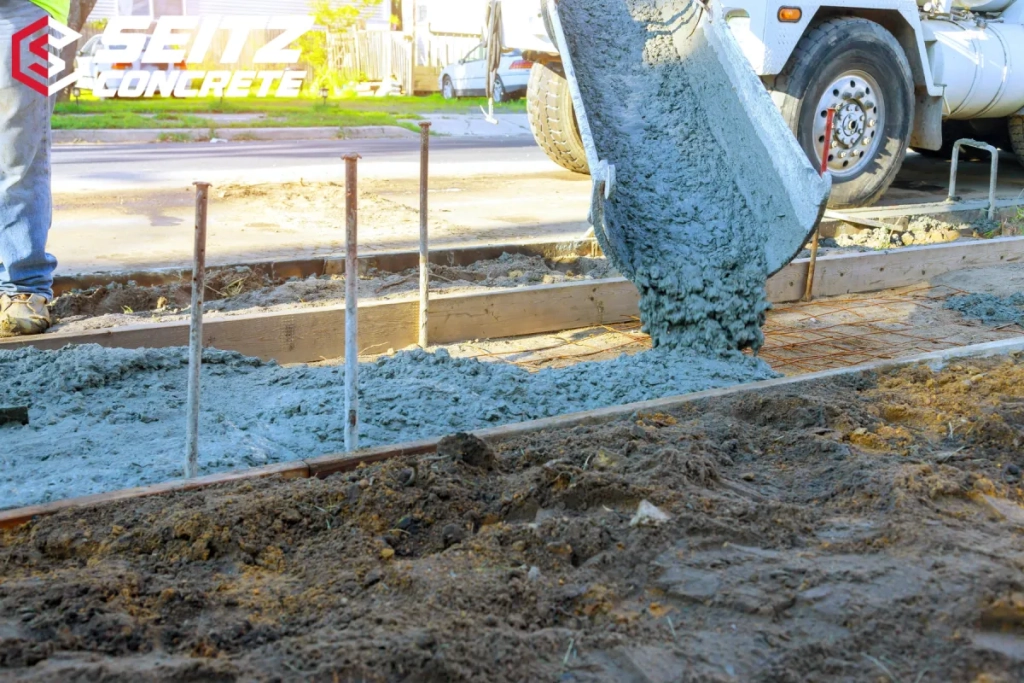
- Proper Grading and a Compacted Base: We never pour concrete directly over raw dirt or loose mud. Our team focuses on proper grading and a compacted base using high-quality gravel crushed to the perfect depth. This gives the slab a stable, rock-solid platform that eliminates void formation.
- Durable, High-Quality Concrete: We use specific concrete mixes designed to withstand heavy daily use and seasonal weather changes. Our options range from clean, functional paths to more decorative, eye-catching finishes, ensuring your project meets your exact visual and functional goals.
- Expansion Joints and Proper Water Runoff Planning: To protect the concrete from natural ground movement, our designs include strategic expansion joints and proper water runoff planning. We route rainwater safely away from the edges of the slab so the underlying foundation remains completely dry and secure.
By prioritizing these steps, we provide property owners with total peace of mind and long-lasting protection for their investments.
People Also Ask (FAQ)
Are uneven sidewalks considered a legal liability?
Yes. Uneven concrete sections that create a lip higher than a quarter-inch violate standard safety guidelines and are classified as trip hazards, which can expose property owners to injury claims.
Can a sunken sidewalk section be saved, or must it be replaced?
If the concrete panel is still mostly intact without deep cracking, it can sometimes be lifted using professional foam injections. However, if it is badly fractured, complete demolition and replacement is the only permanent solution.
How do tree roots damage sidewalks permanently?
Tree roots expand outward seeking water. As the root diameter grows over time, it exerts upward physical pressure on the slab, snapping control joints and lifting the concrete out of its level bed.
How soon can you walk on a newly poured sidewalk?
You can typically walk on a new concrete path 24 hours after the pour is finished. However, you should keep heavy pets, bicycles, and motorized equipment off the surface for at least three to seven days to allow the material to cure properly.
Conclusion & Next Steps
Unlevel, cracked concrete walkways are more than just bad for your property’s curb appeal; they are structural failures that present serious safety risks. Resolving these issues permanently requires targeting the underlying soil prep, structural reinforcement, and drainage framework rather than just patching the surface.
At Seitz Concrete, we believe your experience with a contractor should feel just as solid as the finished concrete itself. We are a bold, dependable, and professional team built for property owners who want straight talk, meticulous precision, and exceptional quality without generic contractor clichés. Whether you need a premium stamped patio, a heavy-duty commercial flatwork solution, or professional sidewalk installation, we deliver structural strength you can trust.
Tired of tripping over uneven walkways? Contact us today to schedule your professional consultation and request an itemized, transparent quote.