

To choose the right concrete contractor, verify their licensing and insurance, review a portfolio of their recent local work, and obtain multiple detailed, written estimates. Always prioritize contractors who offer specific warranties and use a clear, written contract to protect your investment. By focusing on these core elements, you can avoid cut-rate providers and ensure a durable, structurally sound pour.
Core Selection Criteria: How to Vet a Concrete Professional
Investing in new concrete permanently affects your property’s value, safety, and curb appeal. Whether you are replacing a cracked driveway, expanding a backyard patio, or pouring a structural slab, hiring the right team determines whether the surface cracks after one winter or lasts for decades. The industry is filled with uncertified operations that lack proper training, making it critical to look past generic marketing and focus on verifiable credentials.
Comparative Criteria for Residential Concrete Contractors
The table below outlines the non-negotiable benchmarks you should use to evaluate any potential contractor before signing a contract.
| Criteria | Minimum Standard | Why It Matters |
| Licensing & Registration | Active state/local residential contractor license | Protects you from legal liability and local code violations. |
| Insurance Coverage | $1,000,000+ General Liability & Workers’ Comp | Ensures you are not liable for property damage or on-site worker injuries. |
| Experience Level | Minimum 5 years specializing in your project type | Stamped patios, heavy driveways, and foundations require vastly different skill sets. |
| Warranty Offerings | Written, tiered warranty on structural workmanship | Guarantees the contractor will stand behind their work if premature failures occur. |
When you interview a professional concrete contractor in Edmond, OK, always request proof of general liability insurance and workers’ compensation sent directly from their insurance agency. If a worker gets hurt on your property and the company does not carry proper insurance, you could be held financially liable for the injuries.
Step-by-Step Guide to Hiring Your Contractor
A successful concrete project requires a deliberate, organized hiring process to filter out unreliable operations and find a team committed to professional accountability.
4 Critical Steps from Estimate to Excavation
- Define Your Scope and Specs: Determine your desired dimensions, thickness requirements (such as a 4-inch patio versus a 6-inch heavy vehicle driveway), and desired finish (stamped, broom, or exposed aggregate).
- Request Itemized Bids: Do not accept a single-number estimate scribbled on a notepad; insist on a detailed breakdown including site prep, gravel sub-base depth, concrete mix strength, reinforcement type, and cleanup.
- Conduct Interview and Reference Checks: Speak with past clients from the last year to confirm if the crew kept a clean job site, stuck to the timeline, and communicated clearly when unexpected issues arose.
- Finalize the Written Contract: Ensure payment milestones, exact start and end dates, and a formal change-order process are clearly written down before any money changes hands.
During a recent project assessment for a homeowner in the Oak Tree neighborhood, we noticed they had received a bid that was half the price of the competition. The estimate completely omitted earthwork and sub-base preparation, which highlights why you must compare line items rather than just the final price.
Debunking the “Lowest Bid Is the Best Value” Myth
Why Cheap Concrete Costs Twice as Much
Many property owners fall into the trap of choosing the contractor who submits the lowest estimate, assuming that all concrete work is identical. A significantly lower bid almost always indicates that a contractor is cutting corners in areas you cannot see until the project is finished. To offer a bottom-dollar price, cut-rate crews regularly skip ground preparation, skimp on the gravel sub-base, use a weaker mix, or omit steel reinforcement entirely.
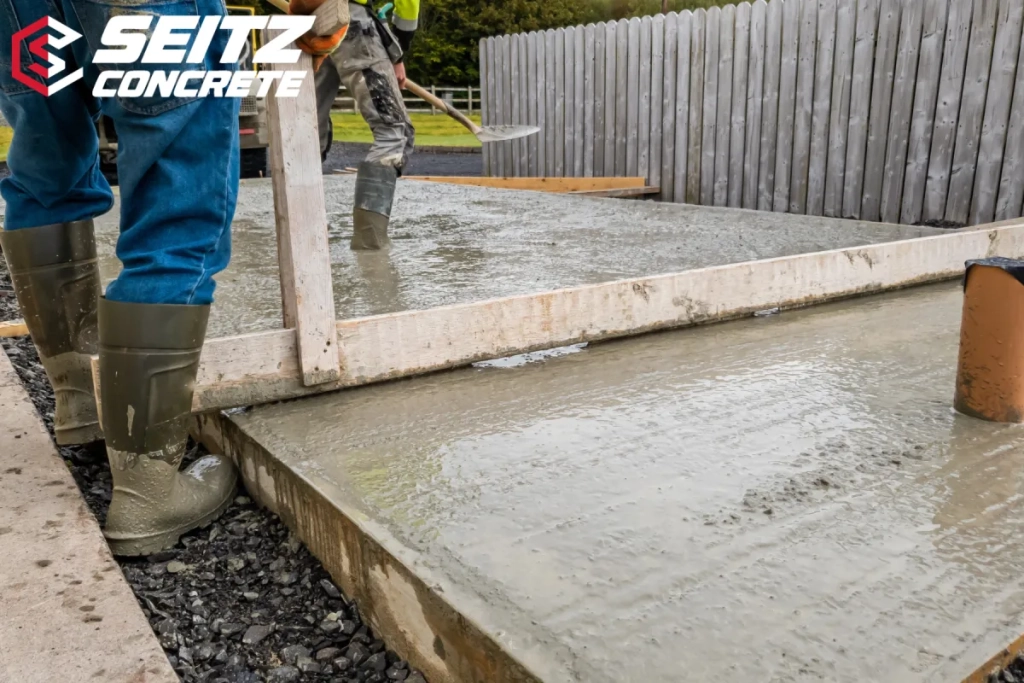
It is highly sensitive to the ground beneath it, meaning that if a crew pours directly over soft mud or uncompacted soil, the heavy slab will shift, sink, and crack under pressure. Within a couple of seasons, a cheap pour will fail, forcing you to pay a qualified concrete contractor in Edmond to tear it out, haul it away, and redo the entire project from scratch.
Technical Specifications: Material and Prep Terms
To confidently interview local professionals, you need to understand the basic technical language of the trade so you can ensure your project meets high-quality benchmarks.
- Sub-base: A thoroughly compacted layer of gravel or crushed stone placed directly beneath the concrete to provide stable structural support and prevent water from pooling under the slab.
- PSI (Pounds per Square Inch): The core measure of concrete’s compressive strength; standard patios can use 3,000 to 3,500 PSI, but driveways require a minimum of 4,000 PSI to handle vehicle loads.
- Control Joints: Intentionally placed grooves cut into the concrete surface that act as planned cracks, ensuring that when the concrete naturally shrinks and expands, it cracks in a straight line hidden within the joint.
- Rebar (Reinforcing Bar): Steel bars placed inside the concrete bed before pouring to add critical tensile strength, holding the slabs together tightly and preventing separation if settling occurs.
Applying Our Premium Process to Solve This
We engineered a dedicated service system to eliminate the common frustrations of unreliable contracting, messy job sites, and structural failures. When you hire us for concrete services in Edmond, OK, your project follows a strict framework built around technical precision and professional accountability.
The Seitz Concrete Framework
- Strict ACI Standards Compliance: Every single project we undertake strictly adheres to American Concrete Institute (ACI) standards. We do not guess on water-to-cement ratios, reinforcement placement, or curing times; we follow established engineering guidelines to ensure maximum structural lifespan.
- Dedicated On-Site Project Management: Communication breakdowns are eliminated by placing a dedicated project manager on every single job site. Your project manager oversees the crew, ensures technical precision at every phase, maintains site cleanliness, and serves as your direct, organized point of contact.
- Tiered Warranty Structure: We stand firmly behind our craftsmanship with an official tiered warranty structure. Depending on the specific service package you select for your driveway, patio, or slab, your installation is backed by an official 1-year, 5-year, or 10-year written warranty.
This organized methodology ensures that your project receives premium execution, resulting in clean finishes and a completely dependable customer experience from the initial consultation to the final walkthrough.
People Also Ask (FAQ)
What is the ideal thickness for a residential concrete driveway?
A standard residential driveway meant for cars and SUVs should be at least 4 inches thick. If you plan to park heavy trucks, boats, or RVs on your property, the thickness should be increased to 5 or 6 inches and reinforced with a robust grid of steel rebar.
How long do I have to wait before driving on a new concrete driveway?
You can safely walk on new concrete roughly 24 to 48 hours after the pour is completed. However, you must wait a minimum of 7 full days before driving standard passenger vehicles on the surface, and large trucks should be kept off the slab for a full 28 days.
Should my concrete contractor seal the finished surface?
Yes, high-quality concrete should always be sealed. A professional sealer protects the surface from moisture absorption, chemical stains, oil spills, and the harsh freeze-thaw cycles common in local winters, so ensure this is included as an itemized line item in your quote.
Can you pour new concrete directly over an old concrete driveway?
It is rarely recommended because any shifting, settling, or cracking in the old layer will quickly transfer directly into the new top layer. For a long-lasting, durable result, the old concrete should be completely demolished, removed, and a brand-new gravel sub-base established.
Conclusion & Next Steps
Choosing a contractor is the single most important factor determining whether your new driveway, patio, or structural slab will stand the test of time. By verifying licenses, insisting on ACI standards, and choosing a team that provides on-site project management and clear warranties, you protect your property and ensure clean, beautiful results.
At Seitz Concrete, we believe your experience with a contractor should feel just as solid as the finished concrete itself. We are a professional team built for property owners who want straight talk, meticulous precision, and exceptional quality without generic contractor clichés. Whether you need a premium stamped patio, a heavy-duty commercial flatwork solution, or a pristine residential driveway, we deliver structural strength you can trust.
Ready to build something that lasts? Contact us today to schedule your professional consultation and request an itemized, transparent quote for your next project.