

A concrete slab around Edmond and Oklahoma City runs per square foot installed, so a 30 by 40 shop pad comes in around, and a 12 by 16 shed pad around. Thickness, reinforcement, and how much the ground needs doing move it most.
Most people who call us about a slab are working backwards from a date. The shop building shows up in six weeks. The shed gets delivered on the 14th. The room addition framer starts Monday. There is a hard deadline, and right now there is dirt.
That changes what you need from a cost guide. You do not just want a number; you want to know what the number buys and how long the whole thing takes, so you can tell the building company whether to hold the delivery.
Here is how slab pricing works around here.
What Does a Concrete Slab Cost Per Square Foot?
Concrete slab costs can vary significantly from one project to another. The final price depends on factors such as the slab’s size, site conditions, preparation requirements, access, thickness, reinforcement, and the type of project.
To understand the amount of concrete a project may require, consider these common slab sizes:
| Pad Type | Common Size | Approx. Square Feet |
| Shed pad | 12 ft × 16 ft | 192 sq. ft. |
| Small shop | 24 ft × 30 ft | 720 sq. ft. |
| Standard shop | 30 ft × 40 ft | 1,200 sq. ft. |
| Large shop | 40 ft × 60 ft | 2,400 sq. ft. |
| Room addition | 16 ft × 20 ft | 320 sq. ft. |
These measurements can help you estimate the scope and surface area of a project, but they should not be treated as a price estimate. A room addition slab, for example, may involve different preparation and connection requirements than a standalone shop pad. The best way to determine the actual cost is to have the project evaluated based on its specific site conditions and requirements.
What is the difference between a shed pad, a shop pad and a room addition slab?
People use “slab” for all three and they are genuinely different jobs.
Shed pad
Lightweight structure, no vehicles, usually the thinnest of the three. What it mostly needs is to be level, drained so it is not sitting in water, and sized right so the shed is not overhanging the edge. Get the edge detail wrong, and the shed sits proud of the slab and rots at the bottom plate.
Shop pad
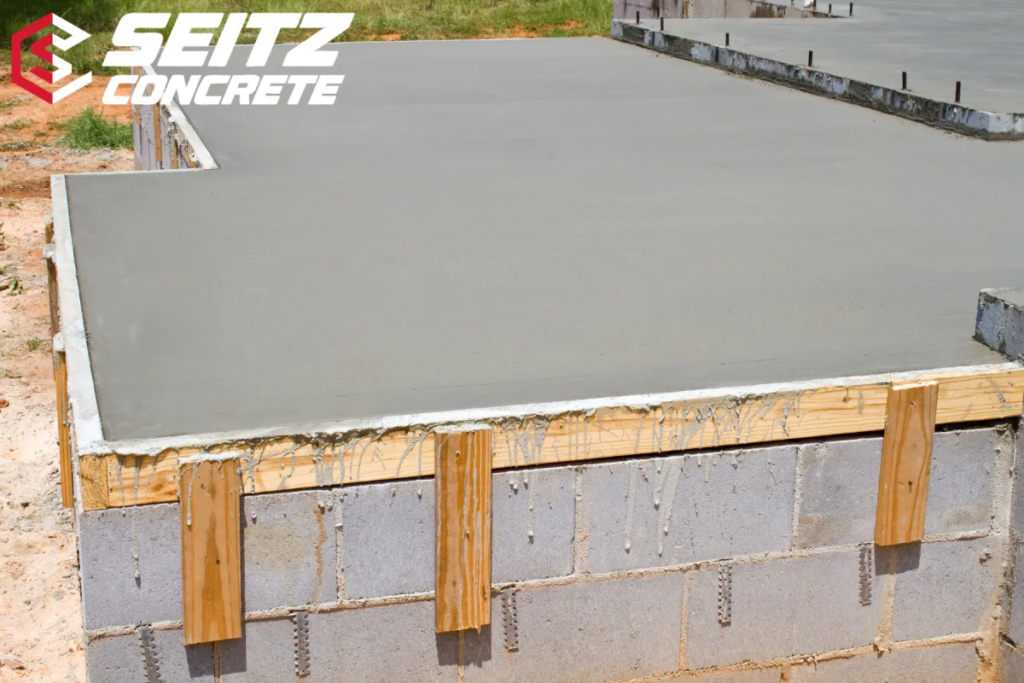
This one carries load. Trucks, a lift, a tractor, tool chests, sometimes a hoist. It wants more thickness and real reinforcement, and the base prep under it matters more than on anything else we pour. We did a 30 by 40 pad for a customer whose shop building was already ordered, and there was a lot of prep and grading in it plus a few surprises once we were into the dirt. That is normal on that kind of job.
Room addition foundation
Now you are structural. It has to integrate with your home footprint, carry wall loads, and not settle differently from the house it is attached to. This is where the American Concrete Institute code actually speaks directly to the work: ACI 332, Code Requirements for Residential Concrete, covers footings, foundation walls and slabs-on-ground for one- and two-family homes. If someone is pouring an addition foundation and cannot tell you what they are building it to, keep looking.
Why does grading cost so much on a slab, and can I skip it?
No, and it is the single most common place a cheap slab bid saves money.
Much of the OKC metro sits on expansive clay. It takes on water and swells, dries out and shrinks, and it does that seasonally, every year, forever. A slab poured on ground that was not evaluated, graded, and compacted is a slab sitting on something that moves. It bridges the soft spot for a while. Then it cracks over it.
What proper prep actually involves is looking at how water moves across the site, cutting the grade so it runs away from the pad rather than under it, and compacting in lifts rather than dumping fill and hoping. For a concrete contractor in Oklahoma City, OK, that may also mean bringing in base material. That is real cost and real machine time, and it is the part of the bid worth paying for.
We wrote a longer piece on why grading matters before a pour if you want the detail on what goes wrong and why.
How does Oklahoma weather change a slab pour?
Two ways worth planning around.
Heat first. Our July averages 93 degrees on NOAA 1991 to 2020 normals, and a slab poured on a hot, windy afternoon loses surface water fast. That means a shorter working window for finishing and a real risk of surface crazing if it is not cured properly. On a hot pour, we are working earlier and paying closer attention to curing, not moving faster.
Cold and wet second. Oklahoma City averages 72 days a year at or below freezing. That is enough freeze-thaw cycling to matter for a slab that will be exposed, and it is another reason the joints and the drainage are not optional.
None of this means you cannot pour in July or January. It means the schedule and cure plan change, and anyone quoting you the same process year-round for an Oklahoma City concrete contractor is not thinking about the conditions that can affect the project.
What should be on a slab bid?
- Slab dimensions and thickness, as numbers.
- Reinforcement: type, size, and spacing.
- What site prep is included, including whether base material is being imported.
- Whether the pad is being formed to the building manufacturer’s specifications, if a building is going on it.
- Vapour barrier, where the slab is going under a conditioned space.
- Control joint layout.
- Warranty term in years, in writing.
On a shop pad, ask specifically whether the pad is sized to the building or to the concrete. Those are two different numbers, and the building company usually has a spec sheet. Bring it to the estimate.
How long does a slab take from first call to pourable?
Site assessment, then prep and forming, then the pour, then cure. The pour itself is often the shortest part.
The one thing I would say to anyone working to a delivery date: call a concrete contractor in Oklahoma City before you order the building, not after. We can usually work to a date if we know about it. Working to a date we found out about yesterday is a different conversation.
Frequently asked questions
How much does a 30×40 shop slab cost in Oklahoma?
A 30 by 40 pad is 1,200 square feet. At our slab pricing, that lands around. Thickness and reinforcement matter more on a shop pad than almost anywhere else, because you are parking equipment on it.
How thick does a shop pad need to be?
A shop pad carrying vehicles, a lift, or heavy equipment usually wants more than the four inches you would put under a shed. The honest answer depends on what is going on it and what the soil underneath is doing.
Do I need a permit for a shed pad or shop pad in Edmond?
Depends on size, setback, and whether a structure is going on it. Edmond runs residential building permits through its online portal, and a slab that supports an accessory structure is normally part of that structure permit rather than a separate concrete permit. Check before you pour, not after.
How long before I can set a building on a new slab?
Concrete reaches most of its strength in the first week and full design strength at about 28 days. For setting a building, tell us your delivery date when you call, and we will work back from it.
What happens if the ground under the slab is not prepped properly?
The slab bridges the soft spot and eventually cracks over it. On OKC metro clay, that soft spot moves seasonally, which is why a pad on unprepped ground can look perfect through the first summer and split the following spring.
Getting a real number for your pad
Square foot pricing gets you in the right area. It cannot tell you what your pad costs, because it does not know your grade, your access, or what is under your topsoil. Seitz Concrete can evaluate those site-specific factors to provide a more accurate understanding of your project.
Tell us the pad size, what is going on it, and when it needs to be ready, and we will come look. Estimates are free. Call us now or send the details through our contact page, and we will get back to you to set a time.